Quick Answer: You can check car fluids about once a month and before long trips, using your owner’s manual as the guide.
Your car relies on a handful of fluids to run, stop, steer, and stay cool. It takes only a few minutes to check car fluids, and no special tools are needed. Still, each fluid has its own rules, so this guide covers when and how to check each one.
Key Takeaways
- When you check car fluids, your owner’s manual is the final word on fluid types, level marks, and timing.
- Engine oil and coolant are usually easiest to check on a cold engine. Automatic transmission fluid is typically checked warm.
- A level that keeps dropping may point to a leak, so a professional should take a look.
- Color and smell offer clues, but they are not the whole story.
- A monthly habit and a few simple notes make car care feel routine.
When Should You Check Car Fluids?
Many drivers find a monthly check easy to remember. Pick a day, such as the first weekend of the month, and stick with it. Pairing it with a basic maintenance schedule also keeps it on your radar.
You should also check car fluids before a long road trip. Do the same before the hottest and coldest months of the year. Plus, it helps to check after you spot a puddle, hear a new noise, or see a warning light. In those cases, the check can help you describe the problem to a technician.
Coolant also deserves a yearly look at its antifreeze protection, ideally before cold weather arrives. Simple test strips from an auto parts store can show whether that protection is still where it should be.
Before You Start: Safety and Setup
Before you check car fluids, a little setup keeps you safe and your readings accurate. First, park on level ground, because a slope can throw off the level. Then set the parking brake. Next, grab your owner’s manual, since it lists the right fluid types and shows where each reservoir sits.
- Wipe dipsticks with a clean rag so the marks are easy to read.
- Wipe dirt from around caps before opening them, so debris stays out of the system.
- Keep hands, hair, and clothing away from belts, fans, and hot engine parts.
- Never open a radiator cap on a hot engine, because the system is under pressure.
- Keep brake fluid off painted surfaces, since it can damage paint.
How to Check Car Fluids Step by Step
Work through the fluids one at a time. Each section below covers the car state, the steps, and the signs that call for a professional.
Engine Oil
Engine oil lubricates moving parts, and it also helps cool and clean the engine. It is the fluid most drivers check first. Here is how to do it:
- Park on level ground with the engine off. A cold engine is easiest and safest. If you just drove, wait a few minutes so the oil can drain back into the pan.
- Open the hood, then find and pull out the oil dipstick.
- Wipe the end clean with a rag, then note the level marks.
- Push the dipstick all the way back in, then pull it out again right away.
- Read the level. It should sit between the ADD and FULL marks, or inside the crosshatch area if your dipstick has one.
- If the level is low, add the oil your manual specifies in small amounts. Do not overfill.
Typically, the gap between the ADD and FULL marks is about one quart, but your manual has the final say. Oil color can also be misleading. Oil that turns dark brown is often just doing its job. So color alone does not always mean it needs changing. Milky or thick oil, or thin oil with a strong fuel smell, may point to a mechanical problem. In that case, have a qualified technician take a look.
Engine Coolant
Coolant helps prevent freezing in winter and overheating in summer. It also protects the cooling system from rust and corrosion.
- Park on level ground and make sure the engine is cold and off.
- Find the translucent coolant reservoir. Most cars have one with HOT and COLD marks.
- With the engine cold, the level should sit at or above the COLD mark.
- If it is low, top it up with the coolant type listed in your manual. A 50/50 mix of water and coolant is typical, but follow your manual.
Do not mix different coolant types. Color alone does not tell you which type your car needs, so rely on your manual instead. Also, needing to add coolant often may mean a leak, so it is worth a professional inspection. Never open the radiator cap while the engine is hot. The system is under pressure, and hot coolant can cause serious burns.
Brake Fluid
Brake fluid carries force from the pedal to the brakes, so this check matters for safety.
- Find the brake fluid reservoir. Your manual shows where it sits.
- Wipe dirt and debris from around the cap first.
- Look at the level from the outside. Most reservoirs are translucent, with MIN and MAX marks. If the level sits between them, you do not need to top it up.
- Check the color. Fluid should look clear to amber, while dark brown or black fluid should be replaced.
A level below the MIN mark may point to worn brakes or a leak. If you see that, have the vehicle checked at a repair facility as soon as possible. On top of that, brake fluid absorbs moisture from the air over time, which lowers its boiling point. Test strips from an auto parts store can help gauge the fluid’s condition. A technician can also check it during routine service.
Automatic Transmission Fluid
Automatic transmission fluid helps your car shift gears, lubricates internal parts, and keeps the transmission cool. This check works differently from oil. Most manuals call for a warm transmission with the engine idling. Some newer cars also have sealed transmissions with no dipstick. If yours has none, skip this check and ask a professional.
- Warm up the car. At least 15 minutes of driving is typical.
- Park on level ground, set the parking brake, and shift to park or neutral, as your manual directs.
- With the engine idling, find and remove the transmission dipstick. Avoid hot or moving parts.
- Wipe it clean, push it fully back in, then pull it out right away.
- Read the level. If it sits at or below the ADD mark, add enough fluid to reach FULL. Do not overfill, and use the fluid your manufacturer specifies.
New fluid is typically red or pink. Reddish-amber to medium brown is often normal for fluid that has been in service. Dark brown or black fluid may signal missed maintenance. Milky fluid, or a burnt smell, may point to a serious problem, so have a transmission specialist check it soon.
Power Steering Fluid
Power steering fluid contains additives that protect the rubber hoses and seals in the steering system. Many manufacturers call for a specific type, so check your manual first.
Some cars have a clear reservoir with MIN and MAX marks. Others have a small dipstick attached to the cap. With the car on level ground and the engine off, wipe the dipstick and reinsert it. Then read the level against the HOT or COLD range. Some newer cars use electric steering and have no power steering fluid. Your manual will say if that applies to you.
A buzzing noise when you turn the wheel slowly may signal low fluid. The level should change very little over time. So if you need to add fluid more than once a year, a leak may be the cause.
Windshield Washer Fluid
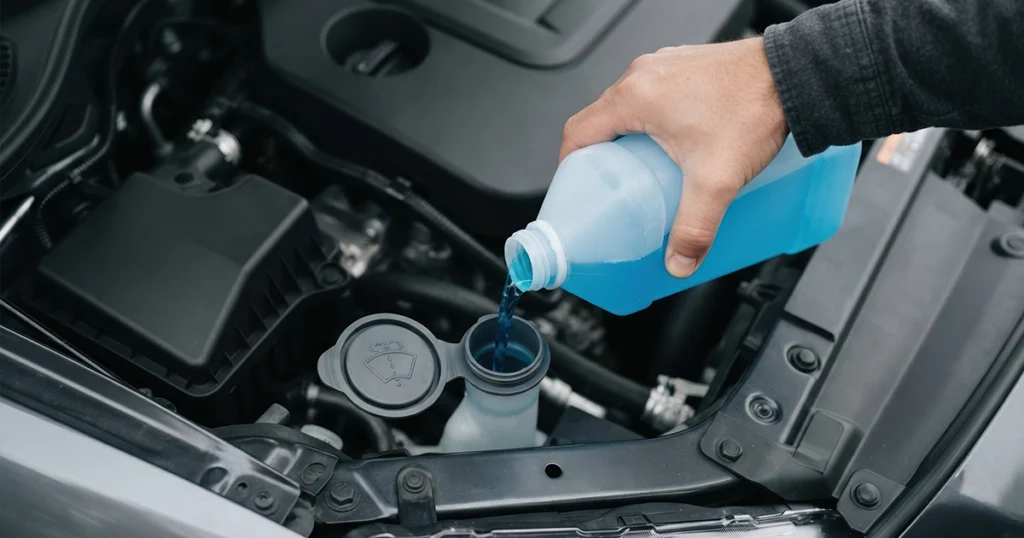
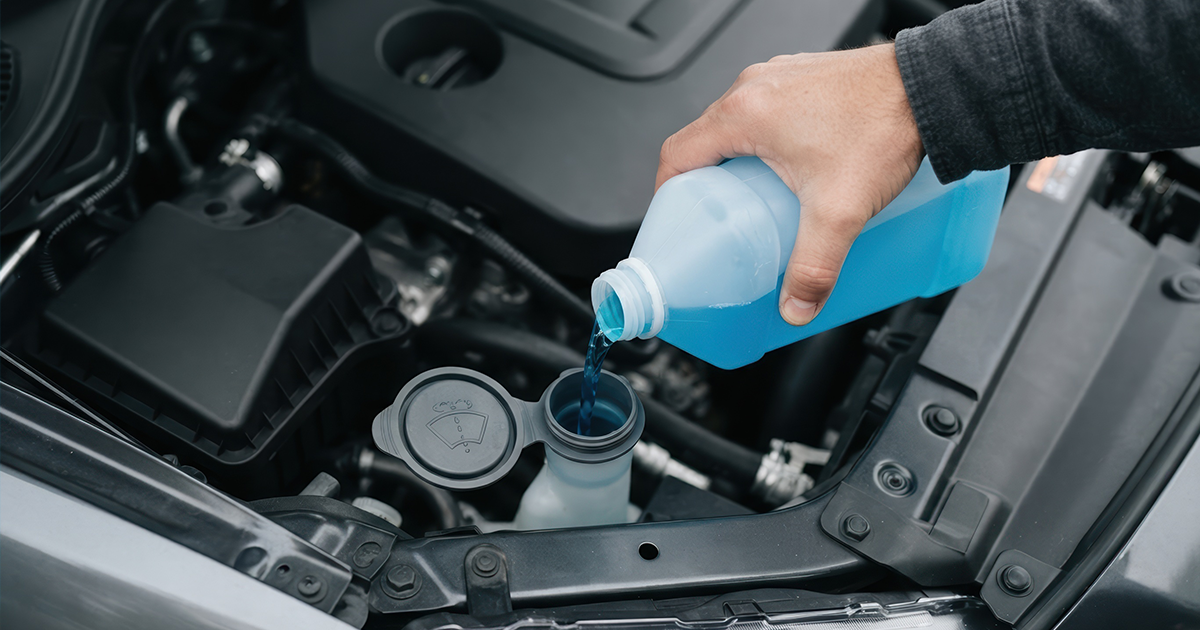
Washer fluid is the simplest check. Look at the reservoir, which usually has a washer symbol on the cap. Top it off when it runs low. Use washer fluid made for vehicles. Some formulas also resist freezing in cold weather.
Car Fluid Check Chart at a Glance
Use this chart as a quick reminder when you check car fluids. Your owner’s manual always has the final say.
Timing is a suggested rhythm. Always follow your owner’s manual for your vehicle.
What Low or Strange-Looking Fluids May Mean
A fluid that sits a little low once in a while is usually not a big deal. A level that keeps dropping is different. It may point to a leak, so a professional should inspect the car.
Watch for these signs:
- Puddles or drips under the car after it sits.
- Milky, thick, or burnt-smelling fluid.
- Fluid that needs topping up again and again.
- New noises, such as buzzing when you steer.
- A warning light on the dashboard.
If you notice any of these when you check car fluids, do not just add fluid and move on. Instead, note what you saw, then book a visit with a qualified technician.
Keeping Up With Maintenance Over the Long Run
Checking fluids is one small part of owning a vehicle for the long haul. When you check car fluids regularly, you can spot trouble early, and the car stays safer to drive. Many owners also jot down the date and result of each check, which makes patterns easy to see.
Some owners also look at repair-cost protection once the factory warranty ends. At REV, this coverage is called Vehicle Service Protection (VSP), and the formal term is a vehicle service contract (VSC). A VSC is not a warranty, and it does not replace routine maintenance. Some contracts ask owners to follow the manufacturer’s maintenance schedule, so keeping copies of your maintenance records can come in handy. For a closer look, see what a vehicle service contract typically covers.
Frequently Asked Questions
Q: How often should I check my car fluids?
Many drivers check car fluids once a month and before long trips. That said, your owner’s manual may suggest a different rhythm for your vehicle.
Q: Should I check engine oil on a hot or cold engine?
Generally, a cold engine is easiest and safest. If you just drove, wait a few minutes so the oil can drain back into the pan.
Q: Is it safe to open the radiator cap to check coolant?
Not when the engine is hot. The system is under pressure, and hot coolant can cause serious burns. Check the reservoir first, with the engine cold.
Q: Does dark engine oil always mean it needs changing?
Not exactly. Oil often darkens as it cleans the engine, so color alone is not a reliable sign. Follow the change interval in your manual instead.
Q: What does low brake fluid mean?
It may mean worn brakes or a leak. Have the vehicle checked at a repair facility as soon as possible.
Q: Do all cars have a transmission dipstick?
No. Some newer cars have sealed transmissions with no dipstick, so a technician usually handles the check.
Q: How do I know which fluid my car needs?
Your owner’s manual lists the exact type for each system. Color alone is not a reliable guide, and mixing types may cause problems.
Next Steps
Want to keep learning? Pick the next read based on what you need.
- Questions to ask before buying a vehicle service contract
- How to file a vehicle service contract claim
- What a vehicle service contract does not cover