Summer brings fun and sun. But there are few things worse than the feeling of opening your car door on a 95-degree afternoon and being greeted by a wall of hot, steaming air, a steering wheel that could brand cattle, and a seatbelt buckle apparently forged in the fires of Mount Doom.
The good news is you don’t have to have this experience every time you get in the car this summer. Keeping your car cool in the hottest months comes down to a few smart habits and simple products.
At a Glance: To keep your car’s interior cooler, your AC working less, and surfaces protected from heat damage this summer, park in the shade whenever you can, use a windshield sun shade, protect your seats, and let hot air escape before you blast the AC. Everyone who climbs in will thank you.
Why Does Summer Heat Turn My Car Into a Sauna?

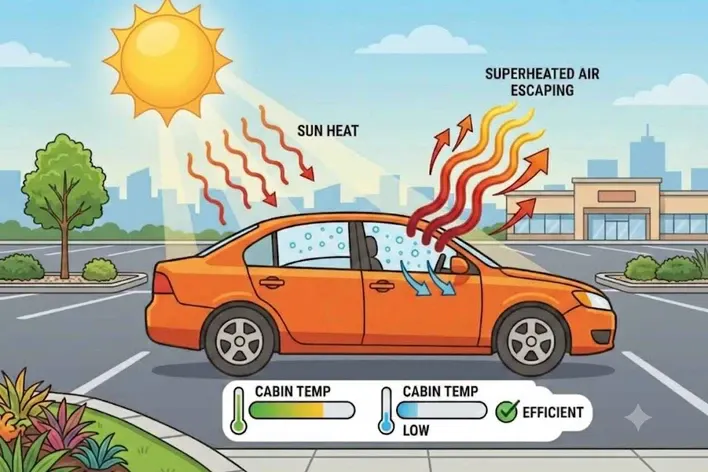
In the summertime, the sun’s rays travel right through your windows and windshield, super-heating everything they touch — seats, dash, and the water bottle you left lying on the seat. The heat has nowhere to go. It’s the greenhouse effect, and it’s happening inside your car as it sits in the parking lot.
On a warm day, a closed car’s interior can climb 50 degrees in under an hour, and the dashboard can hit more than 180 degrees.
So when you slide in and immediately question your life choices — that’s not you being dramatic. Your car literally turned into a tiny greenhouse while you were grabbing groceries. You can’t fight the physics – but you can make a plan to not let the sun win.
Can Summer Heat Damage Your Car?
Sunlight and heat can absolutely damage your car. It can fade and crack your dashboard, dry out and split leather seats, weaken your battery, and put extra strain on your AC. Nearly all of this is preventable, however, with some routine summer car care.
Heat is sneaky. It wears things out and breaks them down over time. Sun-baked dashboards develop spider-web cracks, leather dries out and starts to stiffen. And your car battery actually loses a bit of life every time it cooks under the hood.
You don’t need to wrap your car up in bubble wrap for the season. Just a few minutes of proactive protective measures can save you from annoying and expensive repairs down the road.
Do Windshield Sun Shades Actually Work?
Yes — and they’re literally one of the cheapest and most effective upgrades you can get to help keep your car cooler.
They might look almost too simple to matter, but that front windshield is the single biggest window in your car, and it’s usually aimed right at the sun. Block it, and you’ve cut off the main pipeline of heat into your car.
Blocking the sunlight from pouring through your front glass can drop your interior temperature by up to 40 degrees and keep your steering wheel and dashboard noticeably cooler.
For around $15, it’s the highest-return summer purchase you can get and the payoff is instant — if you only do one thing on this list to make your car more comfortable this summer, this is it.
Protecting Car Seats From Sun and Heat
The sun’s heat and UV rays can quickly dry out and fade your seats, as well as trap heat making them hold warmth long after you’ve parked.
Leather
- Condition leather seats regularly to keep the leather supple and protected — it’s like sunscreen for your seats.
- Use seat covers or a UV-protectant to prevent fading and cracking.
Fabric
- Use a UV-protectant spray to prevent fading.
- A breathable seat cover prevents fading and keeps seats cooler.
Protecting your seats — whether leather or fabric — helps keep your car cool, comfortable, and looking good for years to come.
AC Tips That Actually Make a Difference
Most of the time, people jump in the car on a hot day, crank up the AC, and close the doors. Then they sit inside roasting while the system fights a losing battle against the super-heated air in the car.
To cool things off faster, the first thing you should do is drop the windows and let the steaming hot air escape. After a minute or so, roll up the windows and turn on the AC. Start with the AC on fresh air first and then switch the system to recirculate. Your car’s cabin will cool way faster while using less energy.
Another tip — aim the AC vents up. Cold air falls, so pointing them upward cools the whole cabin faster than blasting your knees.
How to Keep Your Car Cool Without AC
It is possible to survive without AC, whether you’re saving fuel, driving an older car, or just riding out a temporary AC issue. It’s all about prevention, and shade beats cooling every time.
Again, shade is your friend here, along with using window visors and a reflective dashboard cover. Park under a tree or in a garage and leave the windows cracked so hot air can vent.
These steps reduce how hot your car gets in the first place. You’ll be amazed how much cooler the car stays on its own using a combination of a few of these.
Summer Driving Habits That Make Life Better
A few easy habits can help keep your drive cooler and your car happier through the hottest months:
- Keep a towel handy to throw over the steering wheel or gear shift on brutally hot days.
- Stash a spare water bottle to stay hydrated.
- Keep your car hydrated as well by topping off coolant before long trips.
- Wipe the dashboard and condition seats every few weeks to defend against heat and UV wear.
- Keep up with routine car maintenance to keep your vehicle working smoothly during the hot summer months (learn about the difference between vehicle protection and pre-paid maintenance plans).
Keep in mind, a little AC maintenance goes a long way. If your AC seems lazy this summer, changing out the cabin air filter is a cheap and easy way to keep your AC working more efficiently and effectively.
Total Peace of Mind This Summer
The bigger picture: Keeping your car cool and protected isn’t just about comfort. It’s also about protecting your investment and keeping your vehicle running well and looking great for years to come.
Unfortunately, there are some things you just can’t prevent with a $15 sun shade — like a surprise AC compressor repair, the cooling system quitting during the hottest week of the year.
If your car’s factory warranty has expired, repairs can get expensive without a long-term protection plan.
Take this self-assessment to see if a vehicle service protection plan could help to prevent some of the stress of unexpected mechanical repairs — so you can relax this summer instead of worrying about what might break next.
Understand Vehicle Protection Options
Frequently Asked Questions About Keeping Your Car Cool in Summer
Q. How do I keep my car cool in summer?
Park in the shade whenever possible, use a windshield sun shade, protect your seats from direct sun, and let hot air escape for 30–60 seconds before turning on the AC. These small habits keep your interior cooler and reduce strain on your AC system.
Q. Should I use a windshield sun shade?
Yes. A windshield sun shade is one of the cheapest and most effective summer upgrades. It can lower your interior temperature by up to 40°F, keeping your steering wheel, dashboard, and seats noticeably cooler for around $15.
Q. How do I protect my car seats from the sun?
Park in the shade or use a sun shade, condition leather seats every month or two, and use seat covers or a UV-protectant spray on both fabric and leather. This prevents fading, cracking, and premature wear.
Q. How do I keep my car cool without AC?
Park in the shade, crack your windows slightly to let heat vent, and use a windshield sun shade, window visors, and a reflective dashboard cover. These steps limit how hot your car gets in the first place, so you rely on AC far less.
Q. Can summer heat really damage my car?
Yes. Prolonged heat can fade and crack dashboards, dry out and split leather, weaken your battery, and strain your AC and cooling system. Most of it is preventable with routine summer care. But mechanical components can still fail, which is where a vehicle service contract can help with covered repair costs. Find out what vehicle service contracts really cover.
Q. How can I keep my AC working efficiently?
Simple routine maintenance such as checking coolant levels and changing cabin air filters can greatly help keep your AC working properly. Find out how a pre-paid maintenance plan can also help you keep up with regular vehicle maintenance.