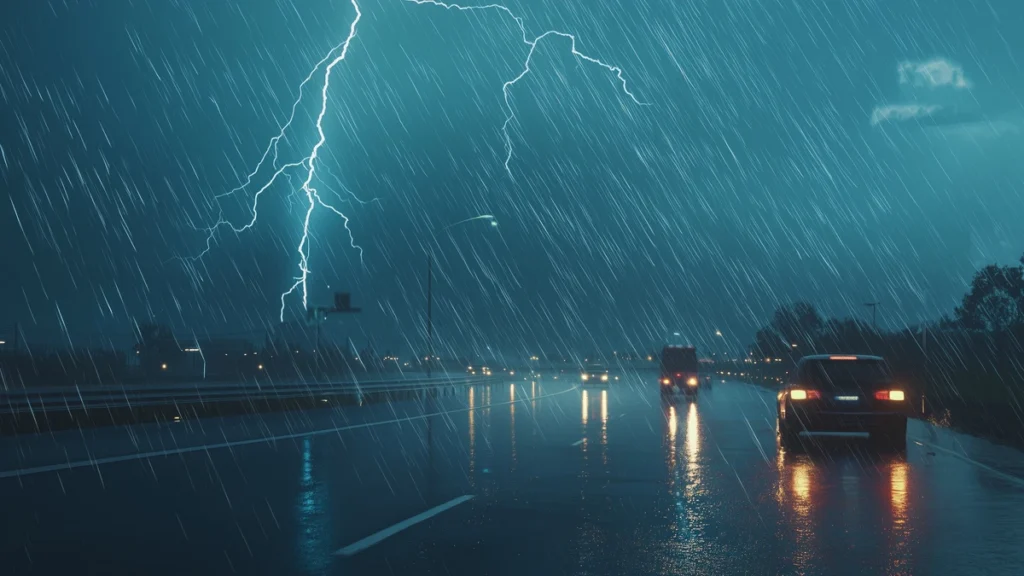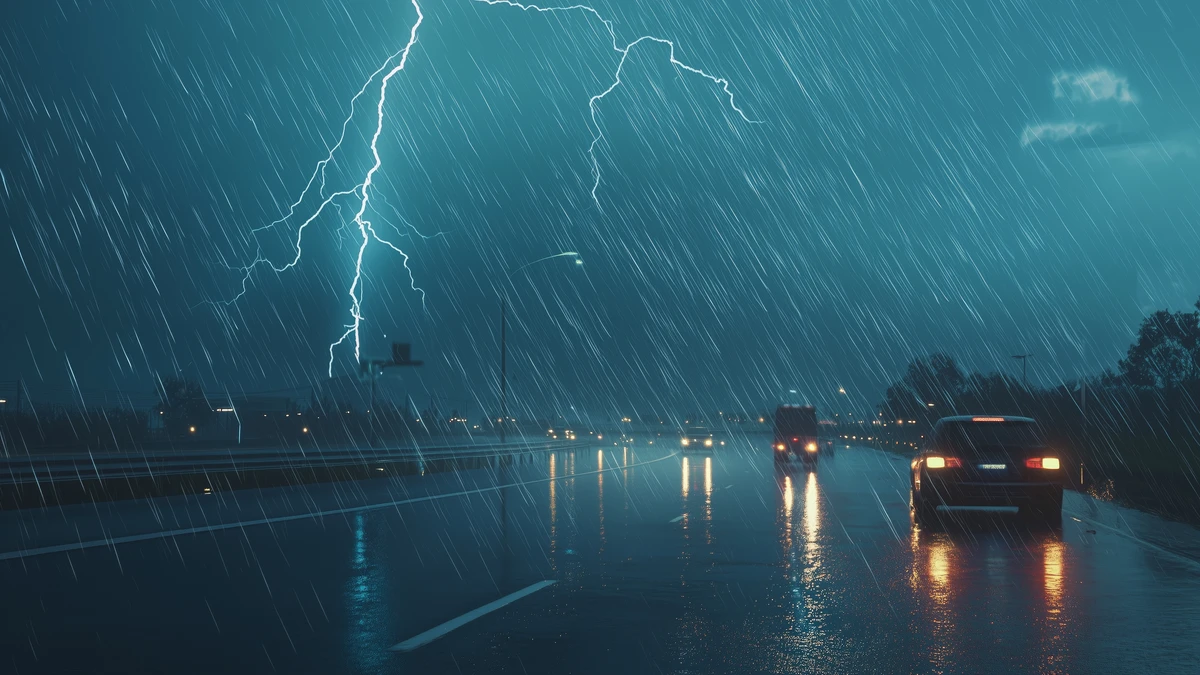
Summer driving brings its own set of hazards – sudden severe storms, flash floods, heat, and blinding glare from the sun.
Wet roads can double your stopping distance. Flooded roads can be far more dangerous than they look. Knowing how to prepare and knowing what to do if you’re driving in severe conditions is what separates a close call from a safe arrival.
Quick Answer: If you’re driving and you encounter severe summer weather, the most important thing to do is slow down and increase the distance between your car and other drivers – before conditions deteriorate. Turn on your headlights for visibility. If you need to, pull into a parking lot or rest area, or onto a safe road shoulder with your hazard lights on.
Why Is Summer Weather More Dangerous Than You Think?
Most drivers are mentally ready for winter conditions like freezing temperatures, ice, and snow. But statistics show that rain-related crashes outnumber snow-related crashes in most U.S. states. According to federal highway data, wet pavement accounts for nearly 70% of all weather-related crashes each year.
Summer adds a few other wrinkles. Afternoon thunderstorms pop up with little warning. Heat causes your car’s tire pressure to spike, which can sometimes increase risk for a blowout. And intense glare from the sun, especially at dawn or dusk, can be blinding.
It’s not that summer weather is secretly catastrophic. It’s that drivers often don’t take it as seriously as they should.
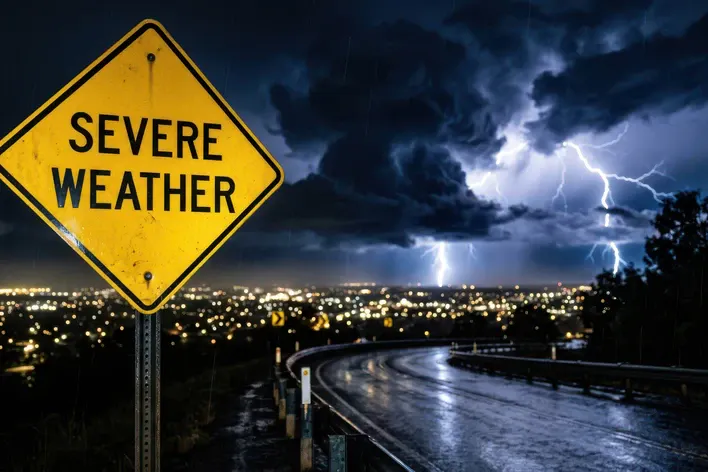
How to Drive Safely in Heavy Storms
When encountering a summer storm, a few simple habits can make a big difference.
Slow down
Speed limits are set for ideal conditions. Rain and storms are not ideal conditions. Slow down even if other drivers are not. Aim for about 5 to 10 mph below the posted limit in moderate rain. Slow down even more in heavy downpours.
Turn on your headlights
Many states legally require your headlights to be on when wipers are running. Aside from the law, it makes good sense as you’ll be much more visible to other drivers.
Double your following distance
The standard 3-second rule becomes a 6-second rule on wet roads. The extra distance gives you extra time to stop if someone slams their brakes in front of you.
Know when to pull over
If it’s raining so hard that you can’t see lane markings or the car ahead of you, pull off the road at a rest stop, parking lot, or a safe shoulder. Keep your lights and your hazards on. Waiting for a storm to pass is a small inconvenience compared to ending up in an accident.
Hydroplaning: What Is It and How Do You Recover?
Hydroplaning happens when your tires can’t push water away fast enough and start riding on top of it instead of gripping the road. Once you begin hydroplaning, steering and braking are almost useless. It can happen at speeds as low as 35 mph if you have worn tires and at even lower speeds on bald tires.
How to recover if you begin hydroplaning
- Ease off the gas gradually. Don’t stomp the brakes
- Keep the wheel straight or steer gently in the direction you want to go
- Let the car slow down naturally until you feel traction return
- Only then apply light, controlled braking
Two of the best ways to prevent hydroplaning are to slow down in rain and keep your tires in good shape. Tire tread depth matters more than most people realize.
Flash Flooding and Standing Water: Never Do This
“Turn around, don’t drown” isn’t just a catchy phrase. It’s based on physics. Just 6 inches of moving water can knock a person off their feet. One foot can sweep a small car off the road. Two feet can carry away most SUVs and trucks.
The danger with flooded roads is that you can’t tell how deep the water is, or whether the road beneath it is intact. Floodwaters hide washed-out pavement, open manholes, massive potholes, and random debris.
If you’re caught in rising water
Stay calm. Unlock your doors immediately and be ready to exit. If the car stalls, get out before the water rises further. Don’t wait for it to stop. Leave your phone or any other personal items. Nothing in your car is worth risking your life.
The best thing to do to avoid being in this situation is, if you see a flooded road, turn around and find another route. It’s worth a little inconvenience to arrive safely at your destination.
Sun Glare and Summer Visibility Hazards
It might seem insignificant compared to storms and flooding, but glare from the sun can also cause dangerous driving conditions. Driving directly into a low sun can reduce your visibility to near zero, especially in the hour after sunrise or before sunset.
To combat glare, use your visor. Keep your windshield clean. A dirty windshield scatters light, increasing the amount of glare. Also, keep a quality pair of polarized sunglasses in the car at all times (polarized lenses cut glare far better than standard sunglasses).
Slow down on glare-heavy roads, especially in residential areas or near intersections where pedestrians may be hard to see.
Before You Leave: Summer Weather Pre-Trip Check
A little preparation goes a long way. It only takes a minute to check your car and make sure you’re ready for the commute or summer road trip.
5-Minute Summer Driving Check
Before every drive this summer, run through this quick checklist.
| ✓ | Check | What to look for | Why it matters |
|---|---|---|---|
| Wipers | Streaking or skipping means it’s time for new blades | Bad wipers can limit visibility when you need it most | |
| Tire pressure | Check before driving for recommended psi | Heat can cause pressure to spike, increasing blowout risk | |
| Lights | Walk around car to check headlights and taillights | Lights increase your visibility to others in a storm | |
| Washer fluid | Top off fluid level | Road dust and spray can reduce visibility | |
| Mobile phone | Charge your phone before you leave and bring a car charger | Navigation, weather and radar, ability to call for help | |
| Weather | Check weather reports specific to where you’ll be driving | Be prepared for severe weather or avoid it entirely |
These are just some quick and easy things you can do every time, before you get on the road. Read more about summer car maintenance you can do yourself before you travel.
How Routine Maintenance Makes a Difference
Getting your car serviced professionally at the beginning of the summer helps ensure it’s in top condition and will perform best if you encounter bad weather, allowing you to drive more confidently.
Most ASE-certified repair shops will perform a multi-point inspection along with an oil and filter change. Make sure the inspection includes checking all headlights, taillights, and brake lights, tire tread and air pressure, and that all fluids are topped off.
If you have a prepaid maintenance plan, schedule your service appointment before summer begins or before long trips. Learn more about what is included with prepaid maintenance plans and how they compare to vehicle service protection plans.
The bottom line: Unsafe driving conditions can occur any time of the year. Don’t underestimate the possibility of severe weather just because it’s summer.
Being aware of changing conditions and knowing what to do when things turn bad can help ensure safe summer travels.
Frequently Asked Questions
Q: What should I do if my car starts to hydroplane?
Ease off the gas, keep the wheel steady, and let the car slow naturally. Don’t brake hard or jerk the steering wheel.
Q: Is it safe to drive through standing water?
No. Even six inches of moving water can be dangerous. If you can’t confirm the depth, find another route.
Q: Should I pull over during a severe thunderstorm?
Yes, if visibility drops significantly, pull into a parking lot or rest area, keep your lights on, and wait it out.
Q: Should I use my headlights in rain during the day?
Yes, absolutely. It helps other drivers see you, and many states require it when wipers are in use.
Q: How do I drive safely in heavy rain?
Reduce your speed, increase following distance, turn on your headlights, and pull over if visibility becomes dangerous.
Q: How do I handle sun glare while driving?
Use polarized sunglasses, keep your windshield clean, use your visor, and reduce speed when visibility is compromised.
Q: What should I keep in my car for summer storm emergencies?
A phone charger, flashlight, basic first aid kit, an emergency poncho, and a window breaker/seatbelt cutter are a solid starting point.
Q: Does vehicle service protection cover flood or storm damage to my car?
No. Flood, hail, and other weather-related damage is typically covered by your auto insurance rather than a vehicle service contract, which usually only cover mechanical repairs. Learn more about what is covered by vehicle service protection vs. auto insurance.
Q: Does roadside assistance help if I break down during a summer storm?
Yes. Most vehicle service protection plans include 24/7 roadside assistance, towing, and rental car benefits if a storm leaves you stranded. Learn more about the top added benefits included with vehicle service contracts.